
Origin & quality

From leaf to cup

We've got nothing to hide. Here's how our organic ceremonial matcha comes to life, from shade-growing all the way to the vibrant green in your bowl. Every step matters, and that's what makes the difference in the cup.

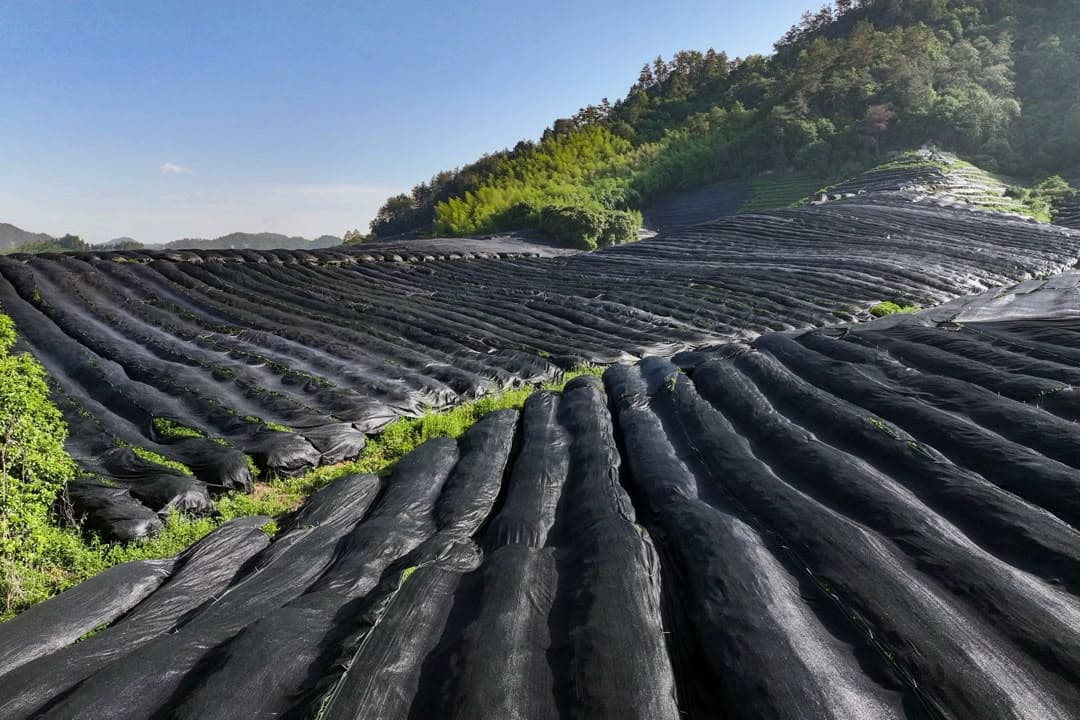
Rows of tea bushes covered with shade cloth on a hillside
01

Shade-grown

A few weeks before harvest, the tea bushes are covered. Deprived of direct sunlight, the leaves concentrate chlorophyll and amino acids: that's what gives matcha its vivid colour and its smoothness, without bitterness.

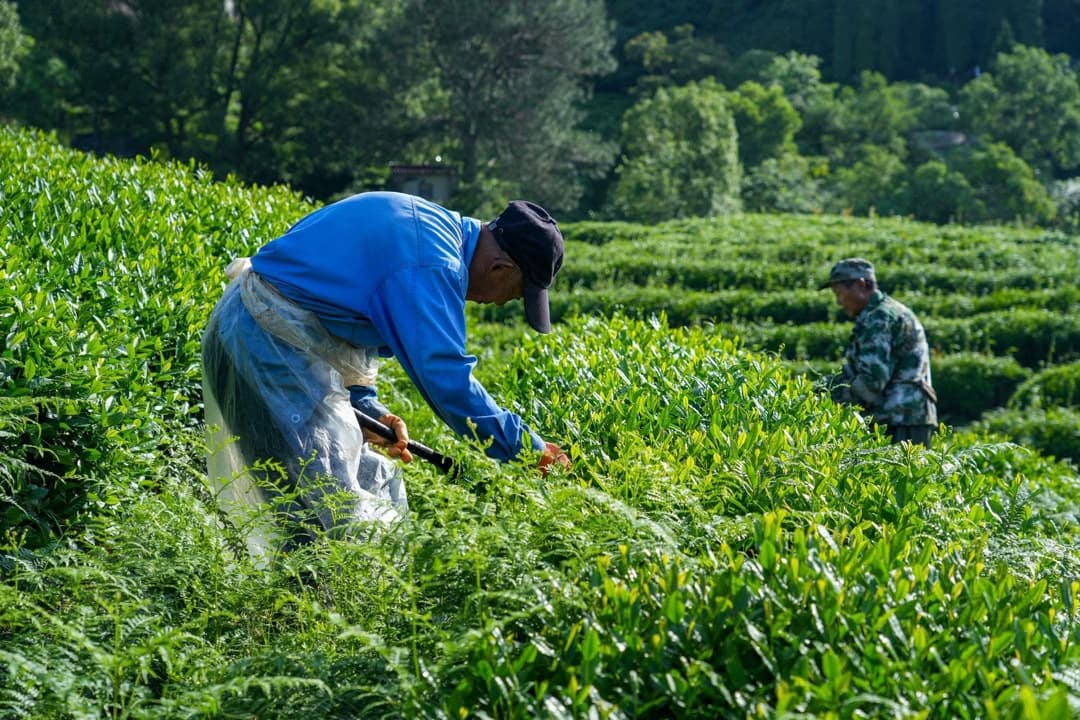
Pickers harvesting young tea leaves on the plantation
02

Hand-picked

Only the youngest, most tender leaves are picked. A careful selection, made by hand, that determines how fine the matcha will be.

Matcha grinding workshop with its stone mills
03

Stone-ground

The dried leaves are ground slowly with granite millstones, in a dedicated workshop. Just a few grams an hour: that's what preserves the aromas and gives an exceptionally fine powder.

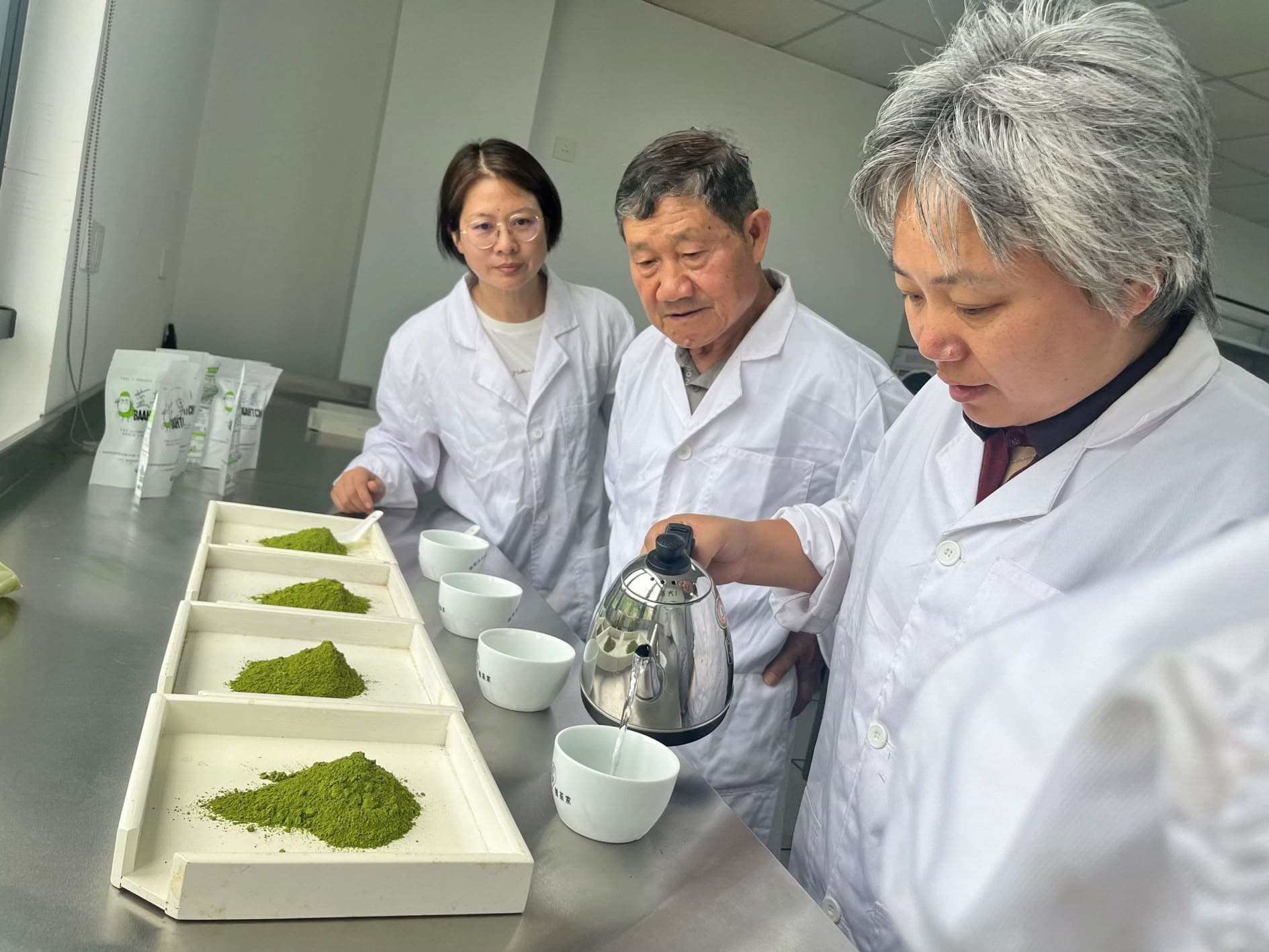
Tasting and quality control of several matcha samples
04

Selected & quality-checked

Every batch is tasted and graded by experts: colour, texture, flavour. Only the matchas that pass this check make it into our pouches.

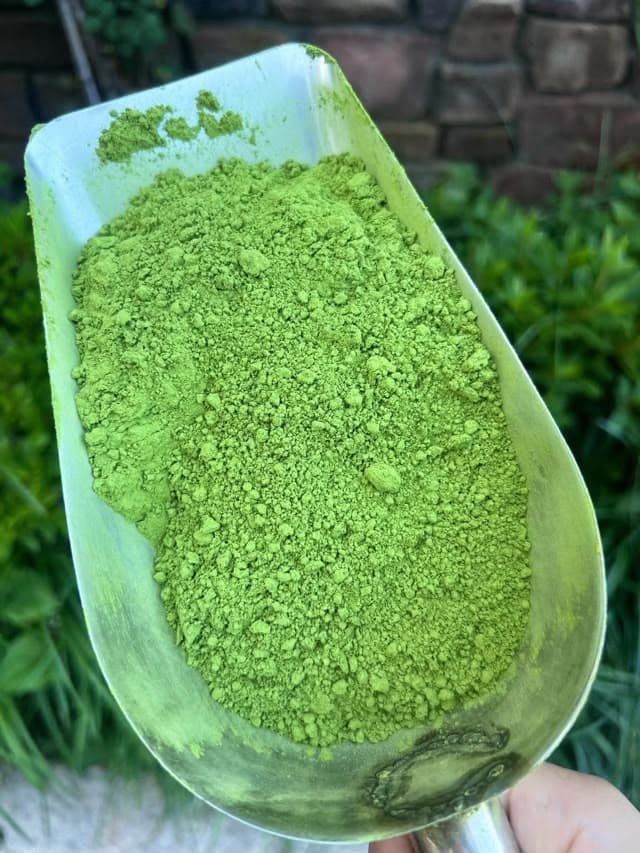
Vibrant green matcha powder in a scoop
05

A vibrant green powder

The result: an organic ceremonial grade 6A matcha, bright green, with a texture close to talc. You can see the quality with the naked eye.

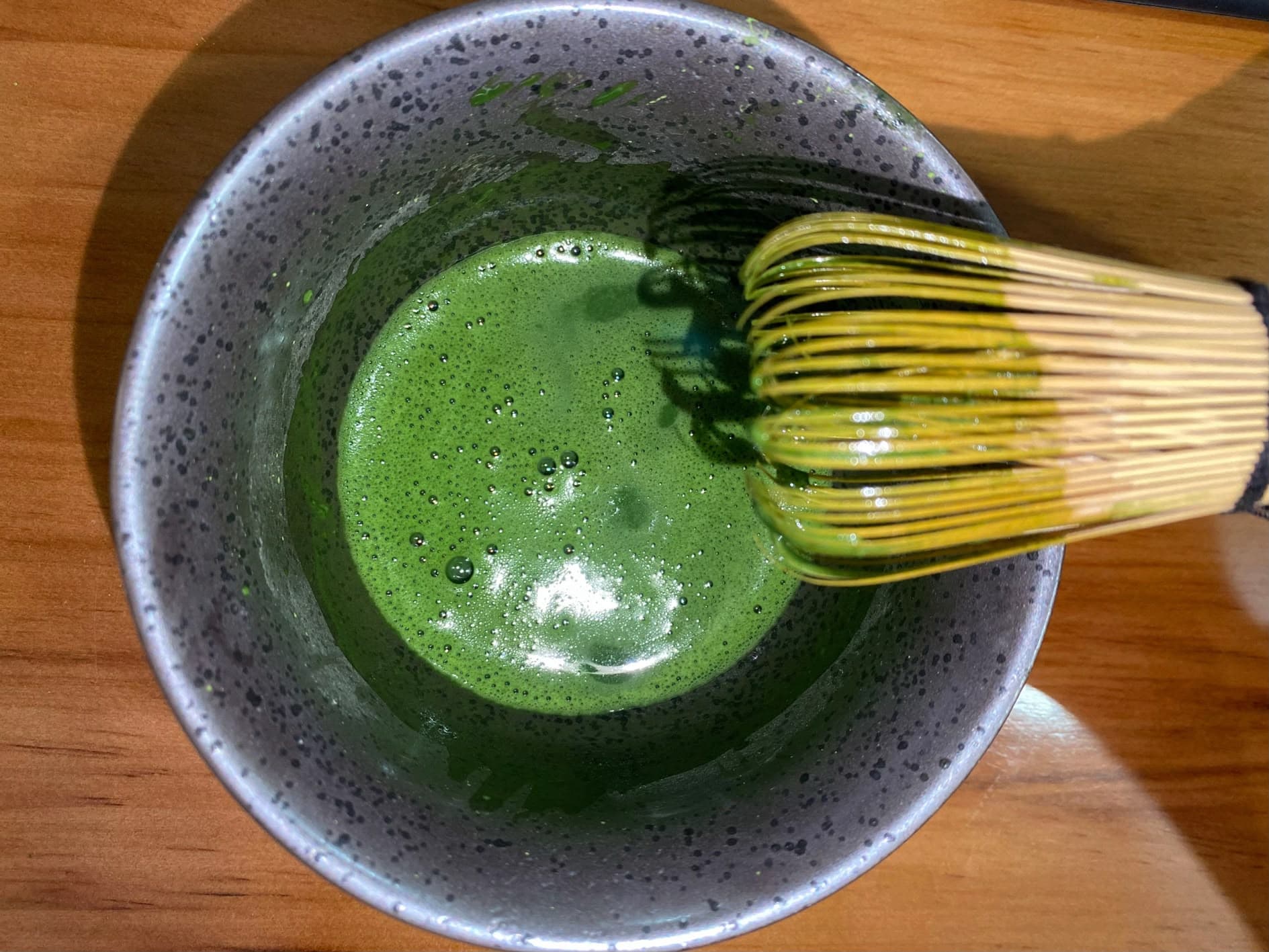
Bowl of matcha whisked with a chasen
06

Your cup, every day

All that's left is to whisk it. Smooth, creamy and naturally sweet: the matcha you'll want to drink every day.

What “ceremonial grade” really means

Ceremonial grade isn't an official label, and it's worth knowing before you buy: it's a trade convention for matcha made from the year's first harvest, the youngest leaves. Those leaves are the most tender, the richest in amino acids and the least fibrous, three reasons why they make a fine powder and a cup you can enjoy on its own.

Later harvests in the season produce tougher, more astringent leaves. They make excellent culinary matchas, designed for baking and sweet drinks, where milk and sugar round off the bitterness. These are two different products, not a good one and a bad one: what matters is knowing which one you're buying.

Check a matcha yourself, in three tests

Colour. A fresh, first-harvest matcha is a clear, almost electric green. A dull, yellowish or khaki powder has either aged in air and light, or been harvested late. It's the quickest test, and you can do it the moment you open the pouch.

Texture. Rubbed between two fingers, a good powder feels like talc: so fine it leaves a mark on your skin. A gritty powder was ground too fast, often by machine. Stone-grinding is slow because speed heats the leaf, and heat carries the aromas away.

Smell. A lively matcha smells of freshly cut grass and soft greenery. If it smells of hay, cardboard or a stuffy cupboard, it has absorbed moisture. It's still drinkable, but the flavour is gone. Hence the advice to keep it airtight, away from light, and to enjoy it within a few weeks of opening.

Why organic matters especially here

With regular tea, you steep the leaves and throw them away: some of what they carry stays in the strainer. With matcha, you drink the whole leaf, ground into powder. Everything it contains ends up in your cup: the antioxidants and L-theanine, but also anything that might have been sprayed on it.

That's why we only sell organic. The term is regulated under EU law and guarantees cultivation without synthetic pesticides or chemical fertilisers. For this particular product, it's not a marketing line: it's the only way to know what you're drinking.

100% certified organicCeremonial grade 6AShade-grownStone-ground

Now taste the difference.

Discover our matcha